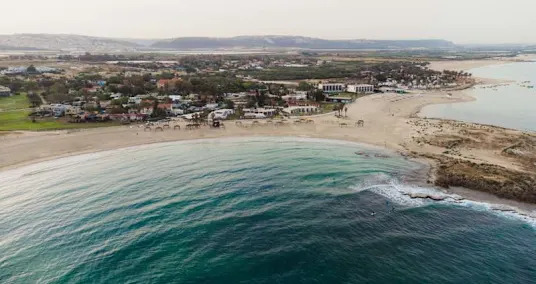
The discovery was made in an ancient shipwreck in the Dor Lagoon near the Carmel Coast, where archaeologists recovered nine pieces of unprocessed iron known as “blooms.”
Researchers from the University of Haifa said Wednesday that an underwater excavation off Israel’s northern Mediterranean coast uncovered what they described as the earliest known cargo of raw iron transported by ship, dating back around 2,600 years, Xinhua reported.
The discovery was made in an ancient shipwreck in the Dor Lagoon near the Carmel Coast, where archaeologists recovered nine pieces of unprocessed iron known as “blooms.” According to the university, the find provides direct evidence of how iron was transported in its earliest commercial stages.
The material was preserved in its original form, having solidified directly in a smelting furnace without undergoing forging or further refinement. Researchers said this distinguishes the cargo from later iron artifacts that typically show signs of shaping or tool-making.
Unlike copper and bronze, which could be melted into liquid form in ancient production processes, iron was heated with charcoal to produce a solid, porous mass. That mass was generally hammered to remove impurities and create denser material suitable for tools and implements.
The recovered blooms showed no indication of that secondary processing stage, suggesting they were transported immediately after production.

Earliest iron shipment discovered in ancient Mediterranean wreck
To determine the age and condition of the cargo, researchers conducted microscopic and chemical analyses.
Radiocarbon dating was also carried out on charred wood embedded in one of the pieces, helping confirm the timeline of the shipment. The findings were published in the journal Heritage Science.
Researchers said the cargo indicates that iron was being moved in raw form from production sites to other locations for further processing, pointing to a level of specialization in ancient manufacturing and trade networks in the Mediterranean.
The University of Haifa said the discovery provides new insight into early iron production and distribution practices in the region.
LATEST POSTS
- 1
 First Houthi launch toward Israel since war began triggers alerts across the Negev
 - 2Why are malnutrition deaths soaring in America?
- 3Artemis will take Americans to the moon for the 1st time since 1972. Why has it been so hard to go back?
- 4Manual for Instructive Application for Youngsters
- 510 High priority Contraptions for Tech Aficionados




- Pat Finn, actor from 'The Middle,' dies at 60 after bladder cancer diagnosis
- Which Diet Prompts the Incomparable Wellbeing Results?
- NASA Perseverance rover sees megaripples on Mars | Space photo of the day for Jan. 7, 2026.
- EU top diplomat Kallas arrives in Kiev to commemorate Bucha massacre
- Building an Individual Brand: Illustrations from Powerhouses
- 3 Italian City Cars That Outsmarted Regulations and Rivals
- Burkina Faso must 'forget' about democracy, military leader says
- Texas cities have some of the highest preterm birth rates in the US, highlighting maternal health crisis nationwide
- How food assistance programs can feed families and nourish their dignity